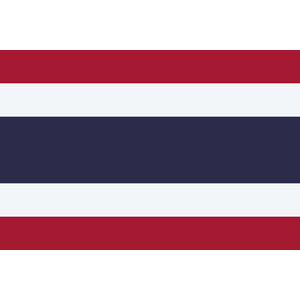
Thai for Missionaries
Spoken in Thailand
So you've been called to speak Thai. Congratulations, Elder or Sister — you're headed to the "Land of Smiles," a culture of extraordinary graciousness, gentleness, and warmth. Here's the honest, encouraging truth: Thai has a reputation for difficulty — it has five tones and its own beautiful script — but missionaries learn it every year, starting exactly where you are. You'll begin with romanization and spoken phrases, then grow into the script. This article won't make you fluent — only immersion, diligence, and the Spirit will do that — but it will give you a genuine head start and show you exactly where to aim before and during the MTC. Let me hand you the keys.
The Secret: Start With Sounds, Grow Into the Script
Thai is spoken by 60–70 million people and belongs to the Kra-Dai family — unrelated to Chinese or English. It's written in the Thai script, an abugida with 44 consonants and a rich set of vowel symbols, traditionally written with no spaces between words. That sounds daunting, so here's the strategy every missionary uses: learn the sounds and tones through romanization first, get talking fast, and layer the script on top over time.
Set expectations honestly: Thai is tonal (five tones), and tone is determined by a mix of consonant class, tone marks, and syllable type — genuinely intricate to read. The romanizations and tone labels below are a scaffold to get you speaking. Your ear, native speakers, and the MTC will do the real tuning. Aim for brave, not perfect.
Your Mission Field
Thai culture is built on respect, gentleness, and keeping harmony — the famous Thai smile is real, and so is kreng jai (a deep considerateness that avoids imposing on others). Buddhism, family, and reverence for elders shape everything. Your effort to speak politely and honor the culture will melt hearts faster than fluency ever could.
Part 1: How Thai Is Written and Romanized
- The script (อักษรไทย): 44 consonant letters (some now redundant), vowel symbols that attach above, below, before, or after the consonant, plus four tone marks. No spaces between words — you learn to see where words break.
- Consonant classes: every consonant belongs to one of three classes — high, mid, low — and the class helps determine a syllable's tone. This is the hard part of reading Thai.
- Romanization: you'll lean on a phonetic transcription (often RTGS-style) at first. This article uses simple phonetic spellings with tone labels.
Part 2: The Five Tones (The Heart of It)
Thai pitch distinguishes meaning. The classic drill uses maa:
| Tone | Contour | Example | Meaning |
|---|---|---|---|
| Mid | flat, middle | maa (มา) | to come |
| Low | flat, low | màa | (grammatical/varies) |
| Falling | high → down | mâa | (varies) |
| High | high, tightened | máa (ม้า)* | horse |
| Rising | dips then up | mǎa (หมา) | dog |
(Tone-to-meaning pairings vary by exact vowel length and spelling — this shows the contours, which is what you must master.)
How to practice: hum the pitch contour first — flat, low, falling, high, rising — then attach the syllable. Getting "dog" (rising) vs "horse" (falling) right is a rite of passage. Tones aren't optional; they are the word.
Part 3: Sounds and Politeness Particles
A few features to know immediately:
- Aspirated vs unaspirated stops: Thai distinguishes a puff-of-air "k/p/t" (kh, ph, th) from a crisp non-puff "k/p/t." Note: ph = "p" (not "f"!), th = "t" (not "th" as in "the").
- Final stops are unreleased: final -p, -t, -k cut off sharply.
- The polite particles — essential from word one:
- Male speakers end sentences with ครับ (khráp)
- Female speakers end with ค่ะ (khâ) (or คะ in questions)
These particles are Thailand's version of built-in courtesy — like Tagalog's po. Use them constantly and you'll sound respectful and warm.
Part 4: Essential Words and Phrases
(Add ครับ/ค่ะ to the end for politeness.)
| Thai (phonetic) | Script | Meaning |
|---|---|---|
| sawàt-dii | สวัสดี | Hello / goodbye |
| sawàt-dii khráp/khâ | สวัสดีครับ/ค่ะ | Hello (polite) |
| khɔ̀ɔp-khun | ขอบคุณ | Thank you |
| khɔ̀ɔp-khun mâak | ขอบคุณมาก | Thank you very much |
| châi / mâi châi | ใช่ / ไม่ใช่ | Yes / No |
| mâi pen rai | ไม่เป็นไร | It's okay / no worries |
| khɔ̌ɔ-thôot | ขอโทษ | Excuse me / sorry |
| khun chʉ̂ʉ arai? | คุณชื่ออะไร | What's your name? |
Numbers:
| # | Thai | # | Thai |
|---|---|---|---|
| 1 | nʉ̀ng (หนึ่ง) | 6 | hòk (หก) |
| 2 | sɔ̌ɔng (สอง) | 7 | jèt (เจ็ด) |
| 3 | sǎam (สาม) | 8 | pàet (แปด) |
| 4 | sìi (สี่) | 9 | kâo (เก้า) |
| 5 | hâa (ห้า) | 10 | sìp (สิบ) |
Part 5: The Language of the Gospel
Start loving these now. Confirm the exact script, spelling, and tones against the official Thai Preach My Gospel, scriptures, and your MTC materials — this is your head start, not the final authority:
| Thai script | Meaning |
|---|---|
| พระผู้เป็นเจ้า | God |
| พระบิดาบนสวรรค์ | Heavenly Father |
| พระเยซูคริสต์ | Jesus Christ |
| พระวิญญาณบริสุทธิ์ | Holy Ghost |
| พระกิตติคุณ | gospel |
| สวดอ้อนวอน | to pray / prayer |
| ศรัทธา | faith |
| การกลับใจ | repentance |
| บัพติศมา | baptism |
| พระคัมภีร์มอรมอน | Book of Mormon |
| ประจักษ์พยาน | testimony |
| ครอบครัว | family |
| ความรัก | love |
Two anchor phrases to memorize now (confirm with your materials):
- ผม/ดิฉัน เป็นผู้สอนศาสนา — "I am a missionary." (ผม phǒm = I for males; ดิฉัน dì-chǎn = I for females)
- ผม/ดิฉัน รู้ว่าสิ่งนี้เป็นความจริง — "I know this is true."
Part 6: Grammar Basics
1. Word order is SVO (like English), and Thai is isolating — no conjugation, no plurals, no tenses on verbs.
2. Time words carry tense: แล้ว (láew) = already/completed, จะ (jà) = will/future, กำลัง (kamlang) = -ing/now. กินแล้ว = "already ate."
3. Classifiers: counting needs a measure word — noun + number + classifier (คน khon for people, อัน an generic).
4. "I" depends on who you are: males say ผม (phǒm), females say ดิฉัน (dì-chǎn) in polite speech. This, plus the ครับ/ค่ะ particles, means your gender shapes your everyday words — learn your set.
Part 7: Common Mistakes to Avoid
| Wrong | Right | Why |
|---|---|---|
| Ignoring tones | drill all five | "dog" vs "horse" hangs on tone |
| Reading ph as "f" | ph = aspirated "p" | phǒm = "pom," not "fom" |
| Dropping ครับ/ค่ะ | end sentences with them | it's core Thai politeness |
| Releasing final -p/-t/-k | cut them off | they're unreleased stops |
| Guessing gospel spellings | use official materials | script + tone matter |
Part 8: Honoring the Culture
Thai courtesy is famous and specific:
- The wai (palms together, slight bow) is the greeting and sign of respect. Return it respectfully; you'll learn the levels.
- The head is sacred; the feet are lowly. Never touch an adult's head; never point your feet at people, sacred objects, or images.
- Kreng jai — deep considerateness that avoids imposing or causing anyone to lose face. Softness and patience win.
- Deep reverence for the monarchy and for Buddhism — always speak of both respectfully.
- "mâi pen rai" ("no worries") captures the gentle, unhurried Thai spirit. Match it with calm, smiling patience.
Approach Thai people with humility and warmth, and their legendary hospitality opens.
Immerse Yourself: The Fastest Path to Fluency
Here's the single most important paragraph in this article. The missionaries who become fluent are the ones who dive in completely and never surface for English. Your mission lives by SYL — "Speak Your Language." Live it fiercely:
- Commit to SYL from day one at the MTC. Speak Thai even when the tones and script feel overwhelming. Every English sentence you let yourself off with is growth you gave away.
- Love the people, and the language follows. You're learning to love and serve real families — let that make you brave about mistakes. Thai people are gracious to anyone who sincerely tries.
- Live in your ears — and then your eyes. Master tones by listening and mimicking; add a few script characters every day.
- Feed on the language: pray in Thai, study Preach My Gospel in Thai, sing the Thai hymns, keep a notebook, and drill your five tones out loud.
- Trust the gift of tongues. Study hard, work hard, and expect the Lord to magnify what you offer Him. Generations of missionaries testify He does.
Try your first full phrase today:
สวัสดีครับ/ค่ะ! ผม/ดิฉันเป็นผู้สอนศาสนา ขอบคุณมากครับ/ค่ะ (sawàt-dii khráp/khâ! phǒm/dì-chǎn pen phûu-sɔ̌ɔn-sàat-sà-nǎa. khɔ̀ɔp-khun mâak khráp/khâ) "Hello! I am a missionary. Thank you very much."
One Final Challenge
Read your testimony aloud (confirm the exact wording with your materials):
ผม/ดิฉันรู้ว่าพระผู้เป็นเจ้าทรงรักคุณ พระเยซูคริสต์ทรงเป็นพระผู้ช่วยให้รอดของเรา
Meaning:
- ผม/ดิฉันรู้ว่า = I know that
- พระผู้เป็นเจ้าทรงรักคุณ = God loves you
- พระเยซูคริสต์ = Jesus Christ
- ทรงเป็นพระผู้ช่วยให้รอดของเรา = is our Savior
Translation: I know that God loves you. Jesus Christ is our Savior.
You've got the foundation, Elder/Sister. The five tones and the script aren't obstacles anymore — they're the tools you'll use to bear testimony in the Land of Smiles.
ขอบคุณมากครับ/ค่ะ — and go give it everything you have.
P.S. — One quirk that will preach for you: Thai's word for "we/us" is เรา (rao) — and it naturally includes everyone present, you and your listeners together. When you teach a family and say "เราเป็นบุตรของพระผู้เป็นเจ้า" — "WE are children of God" — that shared rao wraps them into God's family right in the sentence. Say it on purpose. In a culture built on harmony and belonging, the language itself can testify.
Enjoyed this article? Share it with someone who'd love it too.