Tagalog for Missionaries
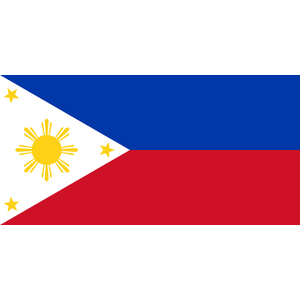
Spoken in the Philippines
So you've been called to speak Tagalog. Congratulations, Elder or Sister — you're about to fall in love with the Philippines. Here's the encouraging truth: Tagalog is one of the most beginner-friendly mission languages there is. It's written in the same alphabet you're reading now, it's almost perfectly phonetic (what you see is what you say), and Filipinos are famously patient and delighted when a foreigner tries. Many missionaries are teaching confidently within weeks. This article won't make you fluent — only immersion and the Spirit will do that — but it will give you a running start before you hit the MTC, and it will show you exactly where to pour your energy. Let me hand you the keys.
The Secret: Tagalog Says Exactly What It Spells
Tagalog uses the Latin alphabet with clean, consistent sounds. Each vowel has one value. Consonants rarely surprise you. There are no silent letters and none of the chaotic spelling rules of English. Only two things feel unfamiliar at first — and neither is hard: the ng sound (one letter in Tagalog) and the glottal stop (a tiny catch in the throat). Learn those two and you can sound out anything.
Tagalog is the heart of Filipino, the national language. You'll hear Tagalog, English, and "Taglish" braided together constantly — and that's good news, because a lot of gospel vocabulary rides in on Spanish and English roots you already half-know.
Your Mission Field
You're headed to (or serving people from) a nation of over 7,000 islands and one of the most Christian, family-centered cultures on earth. Filipinos value respect for elders, warmth, and community — values that map beautifully onto the gospel you'll be teaching. Your willingness to speak their language, even imperfectly, will open doors that nothing else can.
Part 1: The Alphabet
Modern Filipino uses a 28-letter alphabet: the 26 English letters plus Ñ (from Spanish) and Ng (the native sound treated as a single letter).
| Letter | Notes |
|---|---|
| A–Z | The familiar 26 English letters |
| Ñ | From Spanish — the "ny" sound, as in piña |
| Ng | A single letter — the "ng" sound in "singing" |
Letters like C, F, J, Q, V, X, Z appear mostly in borrowed words and names. Before the Spanish arrived, Tagalog was written in Baybayin, a beautiful pre-colonial script now enjoying a proud revival.
Part 2: The Five Vowels (Always the Same)
Like Spanish, Tagalog has exactly five vowel sounds, and they never change:
| Letter | Sound | English Comparison | Example |
|---|---|---|---|
| A | ah | Like 'a' in "father" | araw = AH-raw (sun/day) |
| E | eh | Like 'e' in "bed" | ewan = EH-wahn (dunno) |
| I | ee | Like 'ee' in "see" | ibon = EE-bohn (bird) |
| O | oh | Like 'o' in "go" | oo = OH-oh (yes) |
| U | oo | Like 'oo' in "food" | ulo = OO-loh (head) |
The Golden Rule: these five sounds are constant. Historically Tagalog had only three vowels (a, i, u), so E/I and O/U sometimes swap in informal spelling (lalaki / lalake, man).
Part 3: The Consonants
Most consonants match English closely:
| Letter | Sound | Example |
|---|---|---|
| B | Like English 'b' | bahay = BAH-hai (house) |
| K | Like 'k' (never soft) | kamay = KAH-mai (hand) |
| D | Like English 'd' | Diyos = dee-YOHS (God) |
| G | Hard 'g' as in "go" | gabi = GAH-bee (night) |
| H | Always pronounced, breathy | hangin = HAH-ngin (wind) |
| L | Like English 'l' | lupa = LOO-pah (earth) |
| M | Like English 'm' | mata = MAH-tah (eye) |
| N | Like English 'n' | nanay = NAH-nai (mother) |
| P | Like English 'p' | puso = POO-soh (heart) |
| R | Lightly tapped/rolled | araw = AH-raw (sun) |
| S | Sharp 's' (never 'z') | saya = SAH-yah (joy) |
| T | Like English 't' | tao = TAH-oh (person) |
| W | Like English 'w' | wala = wah-LAH (none) |
| Y | Like English 'y' | yakap = YAH-kap (hug) |
Note: Hard K dominates where Spanish had "c" (calle → kalye, street).
Part 4: The Two Special Sounds (This Is the Whole Game)
1. NG — the most important sound in Tagalog
The letter Ng is one sound: the "ng" in "singing." You can already make it — the trick is making it at the start of a word.
- ngayon = nga-YOHN (now)
- ngiti = NGEE-tee (smile)
Drill: Say "singer." Freeze on the "ng." Launch a word from that frozen position. That's word-initial ng.
2. The Glottal Stop — the silent catch
The little catch in "uh-oh." In Tagalog it's a real consonant that changes meaning, even though it's usually unwritten.
| Word | No glottal stop | With glottal stop |
|---|---|---|
| bata | BAH-tah (bathrobe) | BAH-taʔ (child) |
| baba | bah-BAH (chin) | BAH-baʔ (to go down) |
Part 5: Stress and Rhythm
Stress is meaningful and usually falls on one of the last two syllables:
- salamat = sah-LAH-mat (thank you)
- buhay = BOO-hai (life) vs buhay = boo-HAI (alive)
- Rhythm is syllable-timed — each syllable gets roughly equal length. Don't swallow vowels the way English does.
Part 6: Essential Words and Phrases
| Tagalog | Pronunciation | Meaning |
|---|---|---|
| Kumusta po kayo? | koo-moos-TAH poh kah-YOH | How are you? (respectful) |
| Magandang umaga po | mah-gan-DANG oo-MAH-gah poh | Good morning |
| Salamat po | sah-LAH-mat poh | Thank you |
| Maraming salamat | mah-RAH-ming sah-LAH-mat | Thank you very much |
| Walang anuman | wah-LANG ah-noo-MAN | You're welcome |
| Paalam po | pah-AH-lam poh | Goodbye |
| Opo / Hindi po | OH-poh / hin-DEE poh | Yes / No (respectful) |
| Paumanhin po | pah-oo-man-HIN poh | Excuse me / I'm sorry |
The Respect Particle — po / opo: This is the heart of Filipino manners. Add po when speaking to elders, strangers, or anyone you're teaching. Leaving it out sounds abrupt. As a missionary, po should become second nature — it signals the respect and humility that make people want to listen.
Part 7: The Language of the Gospel
This is where your calling comes alive. These are the words you'll use every day — start loving them now. Confirm exact spellings against the official Tagalog Preach My Gospel and your MTC materials, but here's your head start:
| Tagalog | Pronunciation | Meaning |
|---|---|---|
| Diyos | dee-YOHS | God |
| Amang Nasa Langit | AH-mang NAH-sah LAH-ngit | Heavenly Father |
| Jesucristo | heh-soo-KRIS-toh | Jesus Christ |
| Espiritu Santo | es-PEE-ree-too SAN-toh | Holy Ghost |
| ebanghelyo | eh-bang-HEL-yoh | gospel |
| panalangin | pah-nah-LAH-ngin | prayer |
| manalangin | mah-nah-LAH-ngin | to pray |
| pananampalataya | pah-nah-nam-pah-lah-TAH-yah | faith |
| pagsisisi | pag-see-SEE-see | repentance |
| binyag | bin-YAG | baptism |
| Aklat ni Mormon | ak-LAT nee MOR-mon | Book of Mormon |
| patotoo | pah-toh-TOH-oh | testimony |
| pamilya | pah-MIL-yah | family |
| pag-ibig | pag-EE-big | love |
Two anchor phrases to memorize now:
- Misyonero/Misyonera po ako = mis-yoh-NEH-roh poh ah-KOH — "I am a missionary."
- Alam ko na totoo ito = ah-LAM koh nah toh-TOH-oh ee-TOH — "I know this is true." (the backbone of your testimony)
Numbers
| # | Tagalog | # | Tagalog |
|---|---|---|---|
| 1 | isa | 6 | anim |
| 2 | dalawa | 7 | pito |
| 3 | tatlo | 8 | walo |
| 4 | apat | 9 | siyam |
| 5 | lima | 10 | sampu |
Note: Filipinos often use Spanish numbers for time, money, and prices (uno, dos, tres...) right alongside the native ones.
Part 8: Grammar Basics
1. Verb-first word order (VSO): Kumain ako = "Ate I" (I ate).
2. The focus/trigger system: Instead of "subject does object," Tagalog marks which part is in focus using verb affixes and the markers ang / ng / sa. Beginners get very far using actor focus (mag-/um-) alone: kumain (ate), pumunta (went), nagdasal (prayed).
3. Enclitic particles — small words, big work:
| Particle | Meaning |
|---|---|
| ba | makes a yes/no question |
| na | already / now |
| pa | still / yet |
| po/opo | respect |
Nakapagdasal ka na ba? = "Have you prayed already?"
Part 9: Common Mistakes to Avoid
| Wrong | Right | Why |
|---|---|---|
| ng as "en-gee" | one "ng" sound | It's a single letter |
| Soft "c" sounds | hard K | kape, not cafe |
| Dropping po | always add po/opo | respect is built into the grammar |
| Ignoring the glottal stop | bata vs bataʔ | it changes meaning |
| Stressing like English | keep syllables even | Tagalog is syllable-timed |
Part 10: Honoring the Culture
Respect (paggalang) is everything. Beyond po/opo, Filipinos "mano" — gently taking an elder's hand to their forehead — as a sign of honor. Bayanihan is the spirit of communal unity; you'll feel it in how quickly families fold you in and feed you (accept the food — refusing offends). Filipinos say tayo ("we, including you") to pull you into the group — learn to hear that warmth. And remember: nearly a third of Tagalog vocabulary is Spanish, and kumusta itself is Spanish ¿cómo está? — a gift the language gives you for free.
Immerse Yourself: The Fastest Path to Fluency
Here's the single most important paragraph in this article. The missionaries who become fluent are the ones who dive in completely and never come up for air. Your mission has a culture of SYL — "Speak Your Language." Live it fiercely:
- Commit to SYL from day one at the MTC. Speak Tagalog even when it's slow, embarrassing, and exhausting. Every English sentence you allow yourself is a sentence of growth you gave away.
- Love the people, and the language follows. You're not memorizing vocabulary — you're learning to love and serve real Filipinos. Let that love make you fearless about mistakes.
- Talk to everyone. Jeepney drivers, the sari-sari store owner, the kids on the street. Filipinos will cheer you on.
- Feed on the language: OPM music, teleseryes, and vlogs are everywhere. Pray in Tagalog. Study Preach My Gospel in Tagalog. Keep a little notebook of new words.
- Trust the gift of tongues. Study hard, work hard, and expect the Lord to magnify what you offer Him. Missionaries testify of this again and again.
Try your first full phrase today:
Magandang umaga po! Misyonero po ako. Kumusta kayo? (mah-gan-DANG oo-MAH-gah poh! mis-yoh-NEH-roh poh ah-KOH. koo-moos-TAH kah-YOH) "Good morning! I'm a missionary. How are you?"
One Final Challenge
Read your testimony aloud:
Alam ko na si Jesucristo ang ating Tagapagligtas. Mahal ko kayo.
Break it down:
- Alam ko = ah-LAM koh (I know)
- na si Jesucristo = nah see heh-soo-KRIS-toh (that Jesus Christ)
- ang ating Tagapagligtas = ang AH-ting tah-gah-pag-lig-TAS (is our Savior)
- Mahal ko kayo = mah-HAL koh kah-YOH (I love you)
Translation: I know that Jesus Christ is our Savior. I love you.
You've got the foundation, Elder/Sister. The ng, the glottal stop, and po aren't obstacles anymore — they're the first words of a language you're going to teach the gospel in.
Maraming salamat po — and go give it everything you have.
P.S. — One quirk that will preach for you: Tagalog distinguishes kami ("we," NOT including you) from tayo ("we," including you). When you teach a family and say "Anak tayo ng Diyos" — "WE are children of God, you and I together" — that one word tayo wraps them into the family of God right there in the grammar. Use it on purpose. The language itself can testify.
Enjoyed this article? Share it with someone who'd love it too.