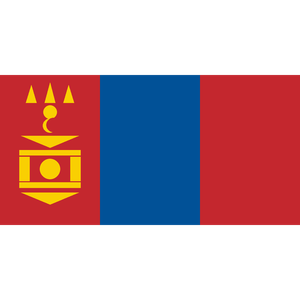
Mongolian for Missionaries
Spoken in Mongolia and Inner Mongolia (China)
So you've been called to speak Mongolian. Congratulations, Elder or Sister — you're headed to the Land of the Eternal Blue Sky, a vast country of open steppe, nomadic herders, and warm, hardy, hospitable people. Here's the honest, encouraging truth: Mongolian has a reputation for difficulty — it's written in a Cyrillic alphabet, its grammar works "backwards" from English, and it has sounds English lacks — but missionaries learn it every year, starting exactly where you are. And it comes with real gifts: no tones, no grammatical gender, and no articles. You'll begin with the alphabet and spoken phrases, then grow into the grammar. This article won't make you fluent — only immersion, diligence, and the Spirit will do that — but it will give you a genuine head start and show you exactly where to aim before and during the MTC. Let me hand you the keys.
The Secret: Learn the Alphabet, Then Let the Sentence Build to the Verb
Mongolian is a Mongolic language — unrelated to Chinese, Russian, or English. Modern Mongolia writes it in a Cyrillic alphabet (the same base as Russian) plus two extra letters, Өө and Үү. The good news: once you learn the alphabet (a couple of weeks of steady work), Mongolian is largely phonetic — you can read what you see. The traditional vertical Mongol script is beautiful and being revived, but Cyrillic is what you'll live in day to day.
Set expectations honestly: the real challenges are vowel harmony (vowels in a word "match," and suffixes change to fit), long vs short vowels, a few throaty consonants, and word order that puts the verb last. The romanizations below are a scaffold to get you speaking. Your ear, native speakers, and the MTC will do the real tuning. Aim for brave, not perfect.
Your Mission Field
Mongolian culture is built on hospitality, endurance, and deep respect — forged by nomadic life on the steppe and immense pride in a history that once spanned continents. A guest is sacred; no traveler is ever turned away from a ger (the round felt home) without food and tea. People are direct, warm, and remarkably resilient. Your effort to honor their customs and speak their language will melt hearts far faster than fluency ever could.
Part 1: The Alphabet (Cyrillic)
Mongolian Cyrillic has 35 letters. Many look and sound familiar, some look familiar but sound different, and two are unique to Mongolian. Here is the whole alphabet, in order:
| # | Letter | Sound |
|---|---|---|
| 1 | А а | "ah" |
| 2 | Б б | "b" |
| 3 | В в | "v"/"w" |
| 4 | Г г | "g" |
| 5 | Д д | "d" |
| 6 | Е е | "ye" |
| 7 | Ё ё | "yo" |
| 8 | Ж ж | "j" (as in jam) |
| 9 | З з | "dz"/"z" |
| 10 | И и | "ee" |
| 11 | Й й | short "i" (glide, like "y") |
| 12 | К к | "k" (mostly loanwords) |
| 13 | Л л | "l" (a breathy, lateral "hl") |
| 14 | М м | "m" |
| 15 | Н н | "n" |
| 16 | О о | "oh" |
| 17 | Ө ө | a rounded "uh"/"ur" — unique to Mongolian |
| 18 | П п | "p" (mostly loanwords) |
| 19 | Р р | a rolled "r" |
| 20 | С с | "s" |
| 21 | Т т | "t" |
| 22 | У у | "oo" (as in food) |
| 23 | Ү ү | a tight "ew" — unique to Mongolian |
| 24 | Ф ф | "f" (loanwords) |
| 25 | Х х | a throaty "kh" |
| 26 | Ц ц | "ts" |
| 27 | Ч ч | "ch" |
| 28 | Ш ш | "sh" |
| 29 | Щ щ | "shch" (rare, loanwords) |
| 30 | Ъ ъ | hard sign (separates syllables; not a sound) |
| 31 | Ы ы | a hard "i" (used in some endings) |
| 32 | Ь ь | soft sign (softens the letter before it; not a sound) |
| 33 | Э э | "eh" |
| 34 | Ю ю | "yu" |
| 35 | Я я | "ya" |
Job one at the MTC: learn to read Cyrillic cold. Once you can decode the letters, the language opens up fast.
Part 2: Sounds and Vowel Harmony
A few features to know immediately:
- No tones — a real relief. Meaning comes from the letters, not pitch.
- Vowel harmony: vowels split into "masculine" (back: а, о, у) and "feminine" (front: э, ө, ү) groups, and a word's vowels — and its suffix vowels — must match the group. This is the rhythm you train your ear to.
- Long vs short vowels change meaning; a doubled vowel is held longer.
- Consonant clusters can pile up; a soft, whispered vowel often slips in to help you say them.
Part 3: Essential Words and Phrases
(Cyrillic with a phonetic scaffold — confirm sounds with native speakers and MTC materials.)
| Mongolian | Phonetic | Meaning |
|---|---|---|
| Сайн байна уу? | sain bain uu | Hello / How are you? |
| Сайн, сайн уу? | sain, sain uu | Fine — and you? |
| Баярлалаа | bayarlalaa | Thank you |
| Их баярлалаа | ikh bayarlalaa | Thank you very much |
| Тийм / Үгүй | tiim / ügüi | Yes / No |
| Уучлаарай | uuchlaarai | Excuse me / sorry |
| Зүгээр | zügeer | It's okay / no problem |
| Баяртai | bayartai | Goodbye |
| Таны нэр хэн бэ? | tany ner khen be | What's your name? |
Respect is grammatical: use the formal Та (ta) for "you" with elders, strangers, and anyone you teach — never the casual чи (chi). Getting this right signals the respect that opens Mongolian hearts.
Part 4: Numbers
| # | Mongolian | Phonetic | # | Mongolian | Phonetic |
|---|---|---|---|---|---|
| 1 | нэг | neg | 6 | зургаа | zurgaa |
| 2 | хоёр | khoyor | 7 | долоо | doloo |
| 3 | гурав | gurav | 8 | найм | naim |
| 4 | дөрөв | döröv | 9 | ес | yös |
| 5 | тав | tav | 10 | арав | arav |
Part 5: The Language of the Gospel
Start loving these now. Confirm the exact spelling and pronunciation against the official Mongolian Preach My Gospel, scriptures, and your MTC materials — this is your head start, not the final authority:
| Mongolian | Phonetic | Meaning |
|---|---|---|
| Бурхан | Burkhan | God |
| Тэнгэр дэх Эцэг | Tenger dekh Etseg | Heavenly Father |
| Есүс Христ | Yesüs Khrist | Jesus Christ |
| Ариун Сүнс | Ariun Süns | Holy Ghost |
| сайн мэдээ | sain medee | gospel (good news) |
| залбирал / залбирах | zalbiral / zalbirakh | prayer / to pray |
| итгэл | itgel | faith |
| наманчлал | namanchlal | repentance |
| баптисм | baptism | baptism |
| Мормоны Ном | Mormony Nom | Book of Mormon |
| гэрчлэл | gerchlel | testimony |
| гэр бүл | ger bül | family |
| хайр | khair | love |
Two anchor phrases to memorize now (confirm with your materials):
- Би номлогч — "I am a missionary." (Bi nomlogch)
- Би үүнийг үнэн гэдгийг мэднэ — "I know this is true." (Bi üüniig ünen gedgiig medne)
Part 6: Grammar Basics
1. Word order is SOV — the verb comes last. English "I read a book" becomes "I a book read" (Би ном уншдаг). Train yourself to hold the action until the end of the sentence — this is the biggest mental shift.
2. Suffixes, not prepositions. Mongolian is agglutinative: it glues case endings onto nouns instead of using little words like "to," "from," "with." One noun can carry a stack of endings — and vowel harmony decides which vowels those endings use.
3. No gender, no articles. There's no "a/the," and no he/she distinction to worry about in the basics.
4. Tense and politeness live on the verb. The verb ending tells you past, present, or future — and your level of respect. Learn your polite verb forms and use them with everyone you teach.
Part 7: Common Mistakes to Avoid
| Wrong | Right | Why |
|---|---|---|
| Keeping English word order | put the verb last | Mongolian is SOV |
| Ignoring vowel harmony | match front/back vowels | suffixes must agree |
| Using casual чи with elders | use formal Та | respect is built into the pronoun |
| Skipping the two special vowels | drill Ө and Ү | they carry real meaning |
| Guessing gospel spellings | use official materials | Cyrillic precision matters |
Part 8: Honoring the Culture
Mongolian courtesy is warm and specific — much of it centered on the ger and the steppe:
- A guest is sacred. You'll be offered tea, dairy, or food everywhere — accept with your right hand (or both hands), and at least taste what's given. Refusing outright can offend.
- Ger etiquette: never step on the threshold, move clockwise inside, and don't point your feet at the hearth or at people.
- Receive and give with the right hand, often supporting the right elbow with the left — a gesture of respect.
- Honor elders and their history. Mongolians are immensely proud of their heritage; listen, learn, and never make anyone lose face.
- Match their resilience and warmth. Life on the steppe is hard and generous at once — meet it with humility, gratitude, and cheerful toughness.
Approach Mongolians with respect and an open heart, and their legendary hospitality opens.
Immerse Yourself: The Fastest Path to Fluency
Here's the single most important paragraph in this article. The missionaries who become fluent are the ones who dive in completely and never surface for English. Your mission lives by SYL — "Speak Your Language." Live it fiercely:
- Commit to SYL from day one at the MTC. Speak Mongolian even when the alphabet and word order feel overwhelming. Every English sentence you let yourself off with is growth you gave away.
- Love the people, and the language follows. You're learning to love and serve real Mongolian families — let that make you brave about mistakes. They are gracious to anyone who sincerely tries.
- Live in your ears — and then your eyes. Master the sounds by listening and mimicking; drill your Cyrillic until reading is automatic.
- Feed on the language: pray in Mongolian, study Preach My Gospel in Mongolian, sing the Mongolian hymns, keep a notebook, and practice putting the verb last out loud.
- Trust the gift of tongues. Study hard, work hard, and expect the Lord to magnify what you offer Him. Generations of missionaries testify He does.
Try your first full phrase today:
Сайн байна уу? Би номлогч. Их баярлалаа! (sain bain uu? bi nomlogch. ikh bayarlalaa) "Hello! I am a missionary. Thank you very much!"
One Final Challenge
Read your testimony aloud (confirm the exact wording with your materials):
Бурхан таныг хайрладаг гэдгийг би мэднэ. Есүс Христ бол бидний Аврагч.
Meaning:
- Бурхан таныг хайрладаг = God loves you
- гэдгийг би мэднэ = I know that
- Есүс Христ = Jesus Christ
- бол бидний Аврагч = is our Savior
Translation: I know that God loves you. Jesus Christ is our Savior.
You've got the foundation, Elder/Sister. The Cyrillic letters, the vowel harmony, and the verb-last word order aren't obstacles anymore — they're the tools you'll use to bear testimony under the Eternal Blue Sky.
Их баярлалаа — and go give it everything you have.
P.S. — One truth that will preach for you: in Mongolian, the sentence builds to the verb — you hold the whole thought, and the action lands at the very end. It's a language that teaches patience and arrival. When you say "Бурхан таныг хайрладаг" — "God... you... loves" — your listener waits through the sentence and then receives the word "loves" like the last piece clicking into place. In a culture that honors the long journey and the welcome at its end, even the grammar knows how to arrive at love. Let it land.
Enjoyed this article? Share it with someone who'd love it too.