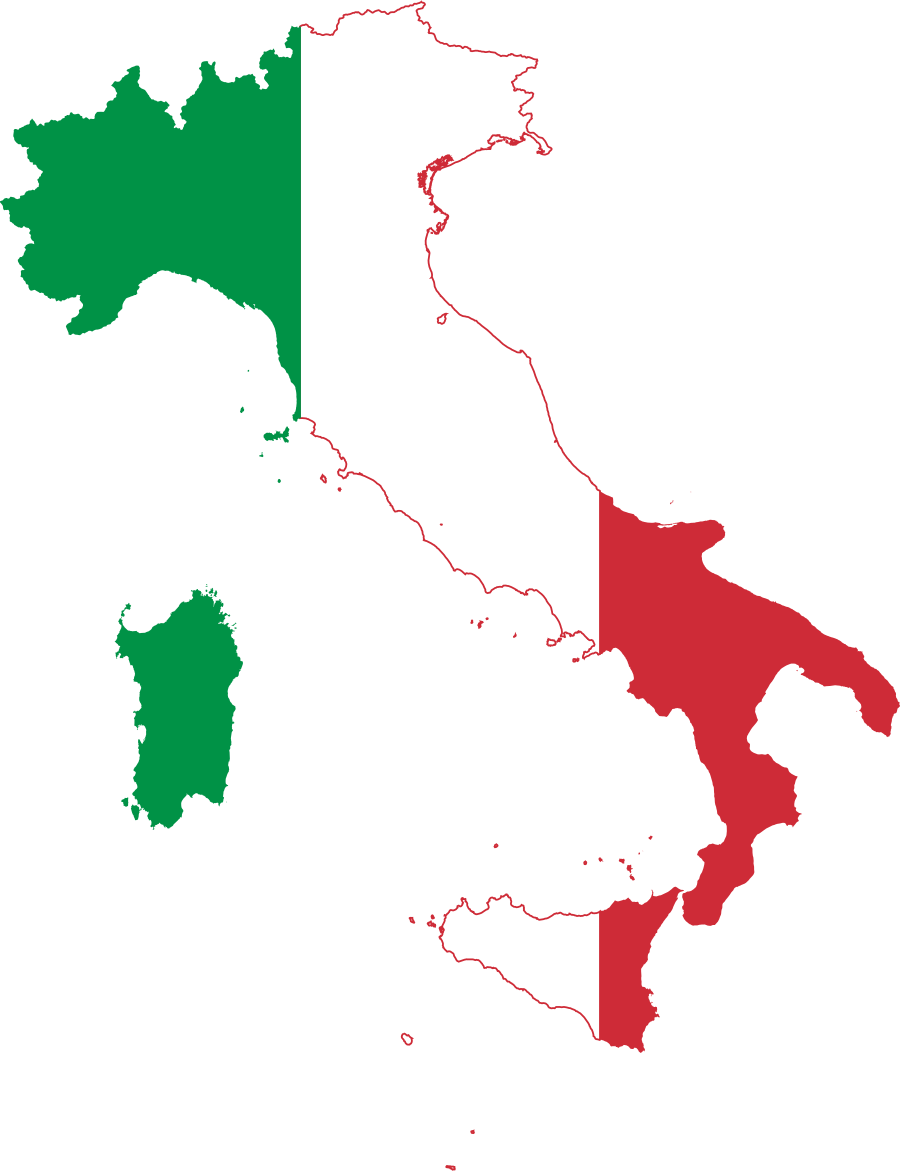
Italian
Spoken in Italy, Switzerland, San Marino, and Vatican City
Want to pronounce Italian like a native? Here's the secret: Italian is one of the most phonetic languages in the world. What you see is what you say. Unlike English with its chaotic spelling, Italian is beautifully consistent. By the end of this article, you'll be able to pick up any Italian text and pronounce it correctly. Opera librettos, Italian menus, Dante - they're all readable once you know the rules. And the rules? They're simple. Let me show you why Italian is the most musical language you'll ever learn.
The Secret: Italian Sounds Exactly Like It Looks
Italian uses the standard Latin alphabet (21 letters - it doesn't use J, K, W, X, Y except in foreign words) with no special characters. No umlauts, no accents that change sounds, no silent letters (mostly). Each vowel has one sound. Each consonant follows clear rules. Italian is so phonetic that Italian children learn to read faster than English-speaking children. You're about to join them.
The Italian alphabet has 21 letters that are always pronounced, plus 5 borrowed letters for foreign words. Master the sounds, and you're reading Italian.
Your Journey: 21 Letters, Pure Musical Logic
We'll cover the vowels (always consistent), consonants (with a few special combos), and the pronunciation patterns that make Italian sound like singing. Seriously - Italian opera exists because the language is that melodic.
Part 1: The Five Vowels (Always the Same)
Italian has five vowel sounds. Not 12 like English. Just five. And they NEVER change.
| Letter | Sound | English Comparison | Example |
|---|---|---|---|
| A | ah | Like 'a' in "father" | casa = KAH-zah (house) |
| E | eh | Like 'e' in "bed" | bene = BEH-neh (well) |
| I | ee | Like 'ee' in "see" | pizza = PEET-tsah (pizza) |
| O | oh | Like 'o' in "go" | sono = SOH-noh (I am) |
| U | oo | Like 'oo' in "food" | uno = OO-noh (one) |
The Golden Rule: These sounds NEVER change. Ever. "A" is always "ah." "E" is always "eh." This is the foundation of Italian pronunciation - pure consistency.
Note: Some regional variations exist (open vs closed E and O), but for standard Italian, stick with these sounds and you'll be perfectly understood.
Part 2: The Easy Consonants
Most Italian consonants are straightforward:
| Letter | Sound | Example |
|---|---|---|
| B | Like English 'b' | bello = BEHL-loh (beautiful) |
| D | Like English 'd' | dare = DAH-reh (to give) |
| F | Like English 'f' | fare = FAH-reh (to do) |
| L | Like English 'l' | luna = LOO-nah (moon) |
| M | Like English 'm' | mamma = MAHM-mah (mom) |
| N | Like English 'n' | nonna = NOHN-nah (grandmother) |
| P | Like English 'p' (less aspirated) | papa = PAH-pah (dad) |
| Q | Like 'k' (always with U) | quanto = KWAN-toh (how much) |
| R | Rolled/trilled R | Roma = ROH-mah (Rome) |
| T | Like English 't' (less aspirated) | tutto = TOOT-toh (everything) |
| V | Like English 'v' | vino = VEE-noh (wine) |
Part 3: The Special Consonants (Where Italian Gets Interesting)
Here's where Italian has its unique rules:
| Letter | Context | Sound | Example |
|---|---|---|---|
| C | Before A, O, U | Hard 'k' sound | casa = KAH-zah (house) |
| C | Before E, I | Soft 'ch' sound like "cheese" | cena = CHEH-nah (dinner) |
| G | Before A, O, U | Hard 'g' like "go" | gatto = GAHT-toh (cat) |
| G | Before E, I | Soft 'j' sound like "giant" | gelato = jeh-LAH-toh (ice cream) |
| H | Always | SILENT (only used to modify C and G) | ho = oh (I have) |
| S | Between vowels | Often 'z' sound | casa = KAH-zah (house) |
| S | Start/after consonant | Sharp 's' sound | sole = SOH-leh (sun) |
| Z | Varies | Can be 'ts' or 'dz' | pizza = PEET-tsah; zero = DZEH-roh |
Critical Rules:
- C before E/I = CH sound: "ciao" = CHOW
- G before E/I = J sound: "giro" = JEE-roh
- H is ALWAYS silent - it's just a modifier
- S between vowels often becomes 'z' sound
Part 4: Special Letter Combinations
Italian has specific combinations that follow strict rules:
| Combination | Sound | Example |
|---|---|---|
| CH | Hard 'k' (before E, I) | che = keh (what); chi = kee (who) |
| GH | Hard 'g' (before E, I) | spaghetti = spah-GEHT-tee |
| SC | Before A, O, U: 'sk' | scarpa = SKAHR-pah (shoe) |
| SC | Before E, I: 'sh' | pesce = PEH-sheh (fish) |
| GL | Before I: like 'lli' in "million" | figlio = FEE-lyoh (son) |
| GN | Like 'ny' in "canyon" | gnocchi = NYOH-kee (gnocchi) |
| CI | Before A, O, U: 'ch' + vowel | ciao = CHOW (hi/bye) |
| GI | Before A, O, U: 'j' + vowel | giorno = JOHR-noh (day) |
Understanding C and G:
Think of it this way:
- C/G + A, O, U = hard sound (k/g)
- C/G + E, I = soft sound (ch/j)
- CH/GH + E, I = hard sound (k/g) - the H overrides the softness
- CI/GI + A, O, U = soft sound (ch/j) + vowel
Examples:
- casa = KAH-zah (hard C before A)
- cena = CHEH-nah (soft C before E)
- che = keh (CH makes it hard before E)
- ciao = CHOW (CI makes it soft before A)
Part 5: Double Consonants (This Matters!)
Italian double consonants are pronounced longer/stronger than single consonants. This changes meaning!
Single vs Double:
| Single | Meaning | Double | Meaning |
|---|---|---|---|
| caro (KAH-roh) | dear/expensive | carro (KAHR-roh) | cart |
| Papa (PAH-pah) | Pope | pappa (PAHP-pah) | baby food |
| nono (NOH-noh) | ninth | nonno (NOHN-noh) | grandfather |
| pala (PAH-lah) | shovel | palla (PAHL-lah) | ball |
| casa (KAH-zah) | house | cassa (KAHS-sah) | cash register |
How to pronounce double consonants:
- Hold the consonant sound longer
- Create a slight pause before releasing
- palla: PAL-lah (hold the L)
- mamma: MAM-mah (hold the M)
- fatto: FAHT-toh (hold the T)
This is crucial! Doubling changes meaning. Practice until you feel the difference.
Part 6: Stress and Accent Rules
Italian stress is predictable:
General Rules:
-
Most words stress the second-to-last syllable
- parola = pah-ROH-lah (word)
- cantare = kahn-TAH-reh (to sing)
- telefono = teh-LEH-foh-noh (telephone)
-
Some words stress the third-to-last syllable
- musica = MOO-zee-kah (music)
- tavola = TAH-voh-lah (table)
- difficile = deef-FEE-chee-leh (difficult)
-
Words with written accent marks: stress that syllable
- città = cheet-TAH (city)
- caffè = kahf-FEH (coffee)
- perché = pehr-KEH (why/because)
Accent marks in Italian:
- Grave (à, è, ì, ò, ù): Indicates stress on last syllable
- Acute (é): Less common, indicates closed E sound
- Accents are only written on final syllables
Part 7: Your First Italian Words
Basic Greetings:
- ciao = CHOW (hi/bye - informal)
- buongiorno = bwohn-JOHR-noh (good morning/day)
- buonasera = bwoh-nah-SEH-rah (good evening)
- buonanotte = bwoh-nah-NOHT-teh (good night)
- arrivederci = ahr-ree-veh-DEHR-chee (goodbye)
- grazie = GRAH-tsyeh (thank you)
- prego = PREH-goh (you're welcome / please)
- per favore = pehr fah-VOH-reh (please)
Common Words:
- sì = see (yes)
- no = noh (no)
- acqua = AHK-kwah (water)
- pane = PAH-neh (bread)
- vino = VEE-noh (wine)
- casa = KAH-zah (house)
- amico/a = ah-MEE-koh/kah (friend)
- amore = ah-MOH-reh (love)
- bello/a = BEHL-loh/lah (beautiful)
- molto = MOHL-toh (very/much)
Food Words (The Important Stuff):
- pizza = PEET-tsah (pizza)
- pasta = PAH-stah (pasta)
- gelato = jeh-LAH-toh (ice cream)
- cappuccino = kahp-poo-CHEE-noh (cappuccino)
- espresso = ehs-PREHS-soh (espresso)
- bruschetta = broo-SKEHT-tah (NOT broo-SHET-tah!)
- gnocchi = NYOH-kee (gnocchi)
- prosciutto = proh-SHOOT-toh (prosciutto)
- mozzarella = moht-tsah-REHL-lah (mozzarella)
- tiramisù = tee-rah-mee-SOO (tiramisu)
Tech Words:
- computer = kohm-POO-tehr (computer)
- internet = een-tehr-NEHT (internet)
- programma = proh-GRAHM-mah (program)
- applicazione = ahp-plee-kah-tsyOH-neh (application)
- codice = KOH-dee-cheh (code)
- software = SOHFT-wah-reh (software)
- tastiera = tah-styEH-rah (keyboard)
- schermo = SKEHR-moh (screen)
Tricky Ones (Test Yourself):
- arrivederci = ahr-ree-veh-DEHR-chee (goodbye)
- buongiorno = bwohn-JOHR-noh (good morning)
- parmigiano = pahr-mee-JAH-noh (parmesan)
- bellissimo = behl-LEES-see-moh (very beautiful)
- cappuccino = kahp-poo-CHEE-noh (cappuccino)
- bruschetta = broo-SKEHT-tah (bruschetta - note the SK!)
- spaghetti = spah-GEHT-tee (spaghetti - note the hard G!)
- chianti = kyAHN-tee (Chianti wine)
Part 8: Common Pronunciation Mistakes
Don't Do This:
| Word | Wrong | Right | Why |
|---|---|---|---|
| bruschetta | broo-SHET-tah | broo-SKEHT-tah | SCH = SK sound |
| cappuccino | kap-oo-CHEE-noh | kahp-poo-CHEE-noh | Double P is held longer |
| espresso | eks-PRESS-oh | ehs-PREHS-soh | No X sound; double S |
| gnocchi | noh-kee | NYOH-kee | GN = NY sound |
| bruschetta | broo-SHET-tah | broo-SKEHT-tah | CH before E = K |
| gelato | geh-LAH-toh | jeh-LAH-toh | G before E = J |
| ciao | see-OW | CHOW | C before I = CH |
Part 9: The Musicality of Italian
Italian is musical because:
-
Every word ends in a vowel (almost)
- This creates smooth flowing sounds
- Words connect naturally
-
Vowels are pure and consistent
- No diphthongs like English "day" (which is really "dey-ee")
- Each vowel is one clear sound
-
Stress patterns create rhythm
- Predictable stress = natural rhythm
- Like musical beats
-
Double consonants add emphasis
- Creates dynamic expression
- Gives words texture
This is why Italian works so well for opera! The pure vowels and clear consonants carry over orchestras beautifully.
Part 10: Regional Variations
Italian has regional accents, but written Italian is standard:
| Region | Characteristic | Example |
|---|---|---|
| Tuscany | Standard Italian | Clear, textbook pronunciation |
| Rome | Softer C/G sounds | Sometimes drops final vowels |
| Milan/North | Clipped, faster | Closer to French/German rhythm |
| Naples/South | More musical, emphasized | Stronger consonants |
| Sicily | Distinct dialect | Many unique words |
Good news: Standard Italian (based on Tuscan) is understood everywhere. Regional accents add flavor but don't prevent understanding.
Your Path Forward: From Reading to Fluency
You made it! You can now pronounce Italian correctly. Pick up any Italian text - poetry, novels, menus, operas - and you can read it aloud beautifully. Italian is yours.
Here's how to cement your new skill:
1. Practice the special sounds
- GL (like "million"): famiglia = fah-MEE-lyah
- GN (like "canyon"): lasagna = lah-ZAH-nyah
- SC before E/I (SH): pesce = PEH-sheh
- Double consonants: Hold them longer!
2. Roll that R The Italian R is rolled/trilled:
- Put tongue behind top teeth
- Push air to make it vibrate
- Practice: Roma, rosso, carro, birra
- Don't stress if it's not perfect - clarity matters most
3. Immerse in Italian media
- Watch Italian films with Italian subtitles (Cinema Paradiso, La Vita è Bella)
- Listen to Italian music (Andrea Bocelli, Laura Pausini, Eros Ramazzotti)
- Watch Italian cooking shows (you'll learn food words!)
- Read Italian news: La Repubblica, Corriere della Sera
4. Remember these key points:
- Five vowels, always the same
- C/G soft before E/I, hard before A/O/U
- H is always silent (just modifies C and G)
- Double consonants are held longer
- SC before E/I = SH sound
- GL before I = "million" sound
- GN = "canyon" sound
- Most stress on second-to-last syllable
5. Next steps Now that you can pronounce Italian:
- Learn basic vocabulary (you can say it all now!)
- Study verb conjugations (Italian loves its verbs)
- Practice with native speakers on language apps
- Read Italian children's books
- Cook Italian recipes (read them aloud!)
- Visit Italy and use your pronunciation!
One Final Challenge
Before you go, let's test your skills with a classic Italian phrase:
La dolce vita
Try it:
La = lah dolce = DOHL-cheh (C before E = CH) vita = VEE-tah
Translation: The sweet life.
Now try this food order:
Vorrei un cappuccino e una bruschetta, per favore
vohr-REH-ee oon kahp-poo-CHEE-noh eh OO-nah broo-SKEHT-tah, pehr fah-VOH-reh
Translation: I would like a cappuccino and a bruschetta, please.
One more, a tech phrase:
Sto programmando un'applicazione web
stoh proh-grahm-MAHN-doh oo-nahp-plee-kah-tsyOH-neh web
Translation: I am programming a web application.
You did it! You can now read Italian phonetically. The musical language of Dante, opera, and cuisine is yours to pronounce.
Bravo! (BRAH-voh) - Well done!
P.S. - Want to sound more Italian? Italians speak with their hands, but they also speak with rhythm. Each syllable gets equal time - Italian is syllable-timed, not stress-timed like English. Say "ca-sa" with equal beats, not "CA-suh." And exaggerate those double consonants - they're not just longer, they're part of the music of Italian!
Enjoyed this article? Share it with someone who'd love it too.