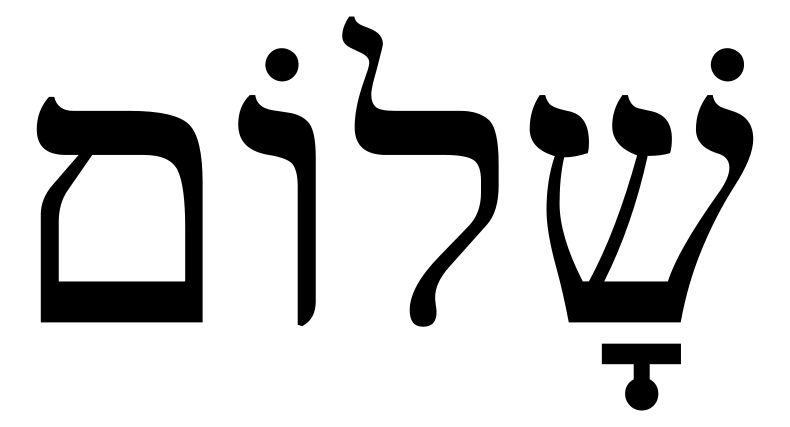
Hebrew
Spoken in Israel
Want to decode Hebrew? Here's the approach: Hebrew uses a different alphabet, reads right-to-left, and usually doesn't write vowels. Sounds challenging? It's actually systematic. By the end of this article, you'll be able to read Hebrew text and pronounce it (with practice on vowels). Israel is "Startup Nation" with a massive tech scene - Waze, Mobileye, cybersecurity giants. Understanding Hebrew opens doors to one of the world's most innovative tech ecosystems. Let me show you why Hebrew is more approachable than it looks.
The Secret: Hebrew Is Logical (And Ancient)
Hebrew has 22 letters, all consonants. Vowels are indicated by small marks (nikud) but are often omitted in modern texts. This seems impossible, but native speakers fill in vowels from context - like "pls snd ml" makes sense to English speakers. Hebrew is written right-to-left, which feels strange at first but becomes natural quickly.
Hebrew has 22 consonant letters, 5 final forms, and 13 vowel marks (optional). Master these, and Hebrew becomes readable.
Your Journey: Letters, Vowels, and Reading Right-to-Left
We'll cover the alphabet (consonants only), vowel marks (nikud), special forms, and pronunciation. By the end, you'll understand why Hebrew is both ancient and perfectly suited for modern tech.
Part 1: The Hebrew Alphabet (אָלֶף־בֵּית)
Important: Hebrew reads RIGHT to LEFT! ←
The 22 Letters:
| Letter | Name | Sound | Example (R-to-L) | Romanization |
|---|---|---|---|---|
| א | Alef | Silent / glottal stop | אָב (father) | av |
| ב | Bet | b or v | בַּיִת (house) | bayit |
| ג | Gimel | g (like "go") | גַּן (garden) | gan |
| ד | Dalet | d | דֶּלֶת (door) | delet |
| ה | Hey | h (or silent at end) | הַר (mountain) | har |
| ו | Vav | v or vowel marker | וָו (hook) | vav |
| ז | Zayin | z | זֵאב (wolf) | ze'ev |
| ח | Chet | ch (like "Bach") | חַג (holiday) | chag |
| ט | Tet | t | טוֹב (good) | tov |
| י | Yod | y or vowel marker | יָד (hand) | yad |
| כ/ך | Kaf | k or kh | כֶּלֶב (dog) | kelev |
| ל | Lamed | l | לֵב (heart) | lev |
| מ/ם | Mem | m | מַיִם (water) | mayim |
| נ/ן | Nun | n | נַעַר (boy) | na'ar |
| ס | Samekh | s | סֵפֶר (book) | sefer |
| ע | Ayin | Silent / guttural | עַיִן (eye) | ayin |
| פ/ף | Pey | p or f | פֶּרַח (flower) | perach |
| צ/ץ | Tsadi | ts | צִפּוֹר (bird) | tsipor |
| ק | Qof | k (deeper than כ) | קוֹל (voice) | kol |
| ר | Resh | r (lightly rolled) | רֹאשׁ (head) | rosh |
| ש | Shin | sh or s | שָׁלוֹם (peace) | shalom |
| ת | Tav | t | תּוֹרָה (Torah) | torah |
Part 2: Final Forms (סוֹפִיּוֹת)
Five letters have special forms when they appear at the END of a word:
| Regular | Final Form | Name | Sound |
|---|---|---|---|
| כ | ך | Kaf | k/kh |
| מ | ם | Mem | m |
| נ | ן | Nun | n |
| פ | ף | Pey | p/f |
| צ | ץ | Tsadi | ts |
Example:
- כלב (dog) = kelev (regular כ)
- מלך (king) = melekh (final ך)
Part 3: The Dagesh (דָּגֵשׁ) - The Dot
A dot inside a letter (called dagesh) changes pronunciation:
BeGaD KeFaT Letters:
These six letters change sound with/without dagesh:
| Letter | With Dagesh | Without Dagesh |
|---|---|---|
| בּ (Bet) | b (like "boy") | ב (Vet) = v (like "very") |
| כּ (Kaf) | k (like "kite") | כ (Khaf) = kh (like "Bach") |
| פּ (Pey) | p (like "pot") | פ (Fey) = f (like "fun") |
| גּ (Gimel) | hard g | ג (softer, modern = same) |
| דּ (Dalet) | hard d | ד (softer, modern = same) |
| תּ (Tav) | hard t | ת (softer, modern = same) |
In Modern Hebrew: Only ב/כ/פ distinction matters. The others (ג/ד/ת) sound the same with or without dagesh.
Dagesh Chazak (Strong Dagesh): Doubling a consonant: שַׁבָּת (Shabbat) - the ב is doubled
Part 4: Vowel Marks (נִקּוּד - Nikud)
Modern Hebrew usually omits vowels! But when learning, vowel marks appear below/above letters:
The Vowel System:
| Mark | Name | Sound | Example |
|---|---|---|---|
| ַ | Patach | a (like "father") | דַּג (dag) = fish |
| ָ | Kamatz | a (like "father") | שָׁלוֹם (shalom) = peace |
| ֶ | Segol | e (like "bed") | מֶלֶךְ (melekh) = king |
| ֵ | Tsere | e (like "say") | בֵּן (ben) = son |
| ִ | Chirik | i (like "see") | מִלָּה (mila) = word |
| ֹ | Cholam | o (like "go") | תּוֹרָה (torah) = Torah |
| ֻ | Kubutz | u (like "food") | קֻבָּה (kuba) = hat |
| ְ | Shva | silent or "uh" | בְּרִית (brit) = covenant |
Vowel Letters (מַטְרֵס קְרִיאָה):
Some consonants double as vowel indicators:
| Letter | As Vowel | Sound | Example |
|---|---|---|---|
| ו | Vav | o or u | שָׁלוֹם (shalom) |
| י | Yod | i or e | בַּיִת (bayit) |
| ה | Hey | silent (marks vowel) | יָפָה (yafa) = beautiful |
Part 5: Reading Without Vowels
Modern Hebrew texts omit vowels!
With vowels: שָׁלוֹם (shalom) = peace Without vowels: שלום (shlwm) = you fill in: shalom
How do native speakers do it?
- Context
- Familiarity with words
- Pattern recognition (root system)
Common patterns:
- CaCaC = basic pattern
- מלך (mlk) = melekh (king)
- ספר (spr) = sefer (book)
You'll need practice! Start with vowels, gradually remove them.
Part 6: Your First Hebrew Words
Note: Hebrew reads RIGHT to LEFT, but I'll write romanization left-to-right
Basic Greetings:
- שָׁלוֹם (shalom) = Peace/Hello/Goodbye
- הַי (hai) = Hi (informal)
- בֹּקֶר טוֹב (boker tov) = Good morning
- עֶרֶב טוֹב (erev tov) = Good evening
- תּוֹדָה (toda) = Thank you
- בְּבַקָּשָׁה (bevakasha) = Please / You're welcome
- כֵּן (ken) = Yes
- לֹא (lo) = No
- סְלִיחָה (slicha) = Excuse me / Sorry
Common Words:
- מַיִם (mayim) = water
- לֶחֶם (lechem) = bread
- בַּיִת (bayit) = house
- חָבֵר (chaver) = friend (m) / חָבֵרָה (chavera) = friend (f)
- עֲבוֹדָה (avoda) = work
- זְמַן (zman) = time
- אֲנָשִׁים (anashim) = people
- יוֹם (yom) = day
- לַיְלָה (layla) = night
- עִיר (ir) = city
Tech Words:
- מַחְשֵׁב (machshev) = computer
- טֶלֶפוֹן (telefon) = telephone
- אִינְטֶרְנֶט (internet) = internet
- תּוֹכְנָה (tokhna) = software
- קוֹד (kod) = code
- תּוֹכְנִית (tokhnit) = program
- אֲתָר (atar) = website
- דּוֹאַר אֱלֶקְטְרוֹנִי (doar electroni) = email
Numbers 1-10:
- אֶחָד (echad) = one (m) / אַחַת (achat) = one (f)
- שְׁנַיִם (shnayim) = two (m) / שְׁתַּיִם (shtayim) = two (f)
- שְׁלֹשָׁה (shlosha) = three (m) / שָׁלֹשׁ (shalosh) = three (f)
- אַרְבָּעָה (arba'a) = four (m) / אַרְבַּע (arba) = four (f)
- חֲמִשָּׁה (chamisha) = five (m) / חָמֵשׁ (chamesh) = five (f)
- שִׁשָּׁה (shisha) = six (m) / שֵׁשׁ (shesh) = six (f)
- שִׁבְעָה (shiv'a) = seven (m) / שֶׁבַע (sheva) = seven (f)
- שְׁמוֹנָה (shmona) = eight (m) / שְׁמוֹנֶה (shmone) = eight (f)
- תִּשְׁעָה (tish'a) = nine (m) / תֵּשַׁע (tesha) = nine (f)
- עֲשָׂרָה (asara) = ten (m) / עֶשֶׂר (eser) = ten (f)
Useful Phrases:
- שְׁמִי ___ (shmi ) = My name is
- מַה שְׁלוֹמְךָ? (ma shlomkha?) = How are you? (to male)
- מַה שְׁלוֹמֵךְ? (ma shlomekh?) = How are you? (to female)
- אֲנִי בְּסֵדֶר (ani beseder) = I'm okay
- אֲנִי לֹא מֵבִין (ani lo mevin) = I don't understand (m)
- אֲנִי לֹא מְבִינָה (ani lo mevina) = I don't understand (f)
Part 7: Reading Practice
אֲנִי מְתַכְנֵת
- אֲנִי (ani) = I
- מְתַכְנֵת (metakhnet) = programmer (f)
Translation: I am a programmer (female).
זֹאת תּוֹכְנָה טוֹבָה
- זֹאת (zot) = this (f)
- תּוֹכְנָה (tokhna) = software
- טוֹבָה (tova) = good (f)
Translation: This is good software.
תֵּל אָבִיב עִיר גְּדוֹלָה
- תֵּל אָבִיב (Tel Aviv) = Tel Aviv
- עִיר (ir) = city
- גְּדוֹלָה (gdola) = big (f)
Translation: Tel Aviv is a big city.
Part 8: Special Pronunciation Notes
Guttural Sounds:
- ח (Chet) = like clearing throat, "ch" in "Bach"
- ע (Ayin) = guttural stop (hard for English speakers)
- ר (Resh) = lightly rolled R (varies by speaker)
Shin vs Sin:
- שׁ (Shin) with dot on right = "sh"
- שׂ (Sin) with dot on left = "s"
- שָׁלוֹם (shalom) = Shin
- שָׂטָן (satan) = Sin
Part 9: The Root System
Hebrew words are built from 3-letter roots:
Root: כ-ת-ב (K-T-V) = writing
- כָּתַב (katav) = he wrote
- כּוֹתֵב (kotev) = writes / writer
- מִכְתָּב (mikhtav) = letter
- כְּתִיבָה (ktiva) = writing
- כְּתֹבֶת (ktovet) = address
Root: ל-מ-ד (L-M-D) = learning
- לָמַד (lamad) = he learned
- לוֹמֵד (lomed) = learns / student
- לִמּוּד (limud) = study
- מְלַמֵּד (melamed) = teacher
This system helps you guess meanings!
Part 10: Common Mistakes
Don't Do This:
| Word | Wrong | Right | Why |
|---|---|---|---|
| שָׁלוֹם | sha-LOME | sha-LOM | Stress usually last syllable |
| תּוֹדָה | TOE-da | to-DA | Stress last syllable |
| ח | H sound | Guttural CH | Like "Bach" not "hat" |
| Reading direction | Left to right | RIGHT to LEFT | Opposite of English! |
Part 11: Israeli Tech Slang
אַפּ (app) = app בָּאג (bag) = bug דֶבָג (debug) = debug סְטַרְטַאפּ (startup) = startup הָאקַתוֹן (hackaton) = hackathon
Israelis love mixing Hebrew with English tech terms!
Your Path Forward: From Alef-Bet to Fluency
You made it! You can now read Hebrew alphabet. Israeli tech sites, street signs, Hebrew GitHub repos - all becoming readable.
Here's how to cement your new skill:
1. Practice right-to-left reading
- Feels weird at first
- Becomes natural with practice
- Start with vowels, gradually remove them
2. Master the BeGaD KeFaT letters
- ב with/without dagesh (b vs v)
- כ with/without dagesh (k vs kh)
- פ with/without dagesh (p vs f)
- Critical for pronunciation!
3. Learn common word patterns
- Hebrew uses root system
- Recognizing patterns helps guess meanings
- CaCaC, CoCeC, CiCeC, etc.
4. Immerse in Hebrew media
- Israeli tech news: Calcalist, Geektime
- Hebrew TV with Hebrew subtitles
- Hebrew podcasts
- Israeli YouTube channels
5. Remember these key points:
- 22 letters, all consonants
- Reads RIGHT to LEFT
- Vowels often omitted
- Dagesh changes ב/כ/פ sounds
- 5 letters have final forms
- Root system (3 letters)
- Stress usually last syllable
6. Next steps Now that you can read Hebrew:
- Learn basic vocabulary (500 words gets you far)
- Study Hebrew verb patterns (binyanim)
- Practice reading without vowels
- Join Hebrew tech communities
- Visit Israel and read everything!
One Final Challenge
Before you go, read this (RIGHT TO LEFT!):
!שָׁלוֹם
אֲנִי לוֹמֵד עִבְרִית
ani lomed ivrit
Translation: I am learning Hebrew!
יִשְׂרָאֵל זֶה סְטַרְטַאפּ נֵישֶׁן
yisrael ze startup neshsen (nation)
Translation: Israel is Startup Nation!
You can now read Hebrew! The language of innovation and ancient wisdom is yours.
!כָּל הַכָּבוֹד (Kol hakavod!) - Well done! / All the respect!
P.S. - Hebrew is easier to speak than read (vowels are clear in speech). The hardest part is reading without vowels, but natives learn this as children. Don't get discouraged! Start with children's books (they have vowels), gradually progress to adult texts. The Israeli tech scene is worth it - Plus, Hebrew unlocks ancient texts, religious studies, and one of the world's most vibrant startup ecosystems!
Enjoyed this article? Share it with someone who'd love it too.