Danish for Missionaries
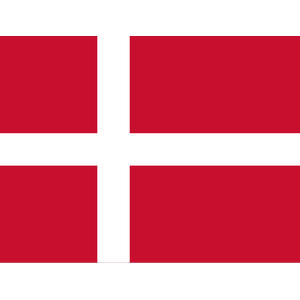
Spoken in Denmark, Greenland, and the Faroe Islands
So you've been called to speak Danish. Congratulations, Elder or Sister — you're headed to (or serving people from) the land of hygge, storybook castles, and the world's happiest people, a country of quiet warmth, dry humor, and deep decency. Here's the wonderfully encouraging truth: written Danish is one of the easiest languages on earth for an English speaker to learn. It uses the same alphabet you're reading now (plus three friendly extra letters), it shares thousands of words with English, and its grammar is refreshingly simple. Many missionaries are reading and building sentences within weeks. This article won't make you fluent — only immersion and the Spirit will do that — but it will give you a real head start and show you exactly where to aim before and during the MTC. Let me hand you the keys.
The Secret: You Already Know More Danish Than You Think
Danish is a North Germanic language — a close cousin of English, and a sibling of Norwegian and Swedish (Danes can largely read both, and Norwegian is nearly identical on paper). Because English and Danish share a common ancestor, you'll meet cognates everywhere: hus (house), bog (book), mor (mother), far (father), vinter (winter), sommer (summer), arm, hånd (hand), finger. You start with a huge head start.
Set expectations honestly: written Danish will feel almost familiar, but spoken Danish is the real challenge. Danes "swallow" sounds, soften consonants, and add a little catch in the throat called the stød. The good news is you'll grow your ear fast by listening, and Danes are famously patient and encouraging with anyone who tries. The romanizations below are a scaffold to get you speaking; your ear, native speakers, and the MTC will do the real tuning. Aim for brave, not perfect.
Your Mission Field
Danish culture is built on equality, trust, humility, and coziness (hygge). Danes are informal, understated, and allergic to showing off — the famous Janteloven ("don't think you're better than anyone") runs deep. They're reserved with strangers and don't do much small talk, but they are honest, loyal, and genuinely warm once trust is earned. Life revolves around home, family, and hygge — that hard-to-translate feeling of warm, safe togetherness (candles, coffee, close friends). These values of humility and sincerity map beautifully onto the gospel you'll teach. Patience, quiet integrity, and real friendship open Danish hearts.
Part 1: The Alphabet and Sounds
Danish uses the same 26 Latin letters as English, plus three extra vowels at the very end of the alphabet: Æ, Ø, Å — 29 letters in all.
| Letter | Sound |
|---|---|
| Æ æ | the 'e' in "bed" / 'a' in "cat" |
| Ø ø | like the 'u' in "fur" (German ö) |
| Å å | the 'aw' in "law" / 'o' in "for" |
A few quirks to know right away:
| Letter/Combo | Sound |
|---|---|
| j | "y" as in "yes" (ja = "ya") |
| soft d (blødt d) | a soft "th"-like sound (mad = "math," gade ≈ "gah-the") |
| r | soft and swallowed, formed deep in the throat |
| g / v at word's end | often soften to a "w"/"y" glide or go nearly silent |
| stød | a tiny catch/glottal stop inside many words — subtle but meaningful |
| silent letters | the d in and, the h in hvad (what) and hvordan (how) go silent |
Don't let this list intimidate you — you learn these by ear, one week at a time.
Part 2: The Vowels
Danish is famous for having a lot of vowel sounds, and each vowel can be long or short. Here are the core sounds to anchor you:
| Letter | Sound | English Comparison | Example |
|---|---|---|---|
| A | ah | 'a' in "father" | tak = tahk (thanks) |
| E | eh | 'e' in "bed" | elske = EL-skeh (to love) |
| I | ee | 'ee' in "see" | fisk = feesk (fish) |
| O | oh | 'o' in "note" | bog = boh (book) |
| U | oo | 'oo' in "food" | hus = hoos (house) |
| Y | ü | German ü (round your lips and say "ee") | by = bü (city) |
| Æ | e/a | 'e' in "bed" | være = VÆ-reh (to be) |
| Ø | ur | 'u' in "fur" | bøn = burn (prayer) |
| Å | aw | 'aw' in "law" | båd = bawth (boat) |
Stress usually falls on the first syllable. Beyond that, listen and copy — Danish rhythm is caught, not taught.
Part 3: Greetings Matter
Danes keep greetings simple and sincere. Learn a few and use them warmly:
| Danish | Phonetic | Meaning |
|---|---|---|
| Hej / Halløj | hai / ha-LOI | Hi / Hello |
| Godmorgen | goh-MORN | Good morning |
| God dag | goh dai | Good day (more formal) |
| God aften | goh AF-ten | Good evening |
| Hvordan går det? | vor-DAN gawr deh | How are you? / How's it going? |
| Godt, tak | got, tak | Fine, thanks |
| Tak / Tusind tak | tak / TOO-sen tak | Thanks / Thanks a thousand |
| Ja / Nej | ya / nai | Yes / No |
| Undskyld | ON-skül | Excuse me / sorry |
| Velbekomme / Selv tak | vel-be-KOM-meh / sel tak | You're welcome |
| Farvel / Hej hej | fah-VEL / hai hai | Goodbye |
A quirk worth knowing: Danish has no single word for "please." Politeness comes from tone, a smile, and often adding tak ("thanks") or a phrase like vær så venlig ("be so kind"). Don't hunt for a missing word — warmth carries it.
Skip the formal "you." Older Danish had a polite De, but today everyone uses the informal du — from children to the Queen. Using du warmly signals you understand Denmark's love of equality.
Part 4: Numbers
| # | Danish | Phonetic | # | Danish | Phonetic |
|---|---|---|---|---|---|
| 1 | en / et | ehn / eht | 6 | seks | seks |
| 2 | to | toh | 7 | syv | sü |
| 3 | tre | treh | 8 | otte | OH-deh |
| 4 | fire | FEE-ah | 9 | ni | nee |
| 5 | fem | fem | 10 | ti | tee |
Fair warning — the big numbers are wild. Danish counts in twenties (a vigesimal system), so 50 is halvtreds (literally "half-third-twenty"), 70 is halvfjerds, 90 is halvfems. Nobody expects you to master these before the MTC — just know they're coming and don't panic when they do.
Part 5: The Language of the Gospel
This is where your calling comes alive. Start loving these now. Confirm exact spellings against the official Danish Preach My Gospel, scriptures, and your MTC materials — this is your head start, not the final authority:
| Danish | Phonetic | Meaning |
|---|---|---|
| Gud | goodh | God |
| himmelske Fader | HIM-mel-skeh FA-der | Heavenly Father |
| Jesus Kristus | YEH-soos KRIS-toos | Jesus Christ |
| Helligånden | HEL-lee-on-en | Holy Ghost |
| evangelium | eh-vahn-GEH-lee-oom | gospel |
| bøn / at bede | burn / at BEH-the | prayer / to pray |
| tro | troh | faith |
| omvendelse | om-VEN-del-seh | repentance |
| dåb | dawb | baptism |
| Mormons Bog | MOR-mons boh | Book of Mormon |
| vidnesbyrd | VID-nes-bürd | testimony |
| familie | fah-MEE-lee-eh | family |
| kærlighed | KAIR-lee-hehth | love |
Two anchor phrases to memorize now (confirm with your materials):
- Jeg er missionær — "I am a missionary." (yai ær mee-shoh-NAIR)
- Jeg ved, at det er sandt — "I know this is true." (yai vehth, at deh ær sant)
Part 6: Grammar Basics
1. Word order is mostly like English — with one twist: V2. In a main clause, the verb comes second, always. So if a sentence starts with something other than the subject, the subject and verb swap: I går læste jeg = literally "Yesterday read I." Keep the verb in second position and you'll sound natural fast.
2. Nouns have two genders — and "the" attaches to the end. Nouns are common gender (en) or neuter (et). Unusually, the word for "the" is a suffix: en bog (a book) → bogen (the book); et hus (a house) → huset (the house). It feels strange for one day, then becomes automatic.
3. Verbs are wonderfully simple. A verb does not change with the subject — jeg er, du er, han er, vi er, de er all use the same er ("am/is/are"). Learn one form and you've learned them all.
4. Adjectives agree, lightly. Adjectives take a small ending to match a noun's gender and number (en fin dag, et fint hus, fine dage) — a simple pattern you'll absorb by ear.
Part 7: Common Mistakes to Avoid
| Wrong | Right | Why |
|---|---|---|
| Keeping strict English word order | remember V2 (verb second) | it's the one real syntax rule |
| Using the old formal De | use du with everyone | Denmark prizes equality |
| Pronouncing every letter crisply | let sounds soften and blend | Danes "swallow" endings |
| Hunting for a word for "please" | there isn't one — use tone + tak | politeness is carried by warmth |
| Skipping Æ, Ø, Å | drill the three extra vowels | they carry real meaning |
| Guessing gospel spellings | use official materials | precision honors the message |
Part 8: Honoring the Culture
Danish courtesy is quiet, sincere, and specific:
- Humility is everything (Janteloven). Don't boast or put yourself above others. Danes respect people who are modest, genuine, and down-to-earth — a natural fit for a servant of Christ.
- Respect personal space and silence. Danes don't do small talk with strangers and are comfortable with quiet. Reserved doesn't mean unfriendly — warmth comes as trust grows.
- Be punctual. Arriving on time is a sign of respect; being late reads as careless.
- Take off your shoes indoors, always, when entering a home. Coffee is the heart of Danish hospitality, so decline it graciously — a warm "Nej tak, men gerne et glas vand eller en kop te" ("No thanks, but I'd love a glass of water or a cup of herbal tea") honors the offer without breaking the Word of Wisdom. Danes respect sincerity, and a kind, unembarrassed no is entirely at home here.
- Embrace hygge. When a family lights candles, pours coffee, and gathers you in from the cold, they are offering you their highest form of welcome. Receive it warmly — that cozy closeness is where hearts open.
Approach Danes with humility, patience, and sincerity, and their understated, loyal warmth opens.
Immerse Yourself: The Fastest Path to Fluency
Here's the single most important paragraph in this article. The missionaries who become fluent are the ones who dive in completely and never come up for air. Your mission lives by SYL — "Speak Your Language." Live it fiercely:
- Commit to SYL from day one at the MTC. Speak Danish even when it's slow and humbling. Every English sentence you let yourself off with is growth you gave away.
- Love the people, and the language follows. You're learning to love and serve real Danish families — let that make you brave about mistakes. Your sincere effort earns their respect.
- Live in your ears. Spoken Danish is learned by listening and copying — mimic the rhythm, the soft sounds, and the melody of native speakers exactly.
- Feed on the language: pray in Danish, study Preach My Gospel in Danish, sing the Danish hymns, and keep a notebook of new words and the cognates you recognize.
- Trust the gift of tongues. Study hard, work hard, and expect the Lord to magnify what you offer Him. Generations of missionaries testify He does.
Try your first full phrase today:
Hej! Jeg er missionær. Tusind tak! (hai! yai ær mee-shoh-NAIR. TOO-sen tak) "Hello! I am a missionary. Thank you very much!"
One Final Challenge
Read your testimony aloud (confirm the exact wording with your materials):
Jeg ved, at Gud elsker dig. Jesus Kristus er vores Frelser.
Break it down:
- Jeg ved, at = I know that
- Gud elsker dig = God loves you
- Jesus Kristus = Jesus Christ
- er vores Frelser = is our Savior
Translation: I know that God loves you. Jesus Christ is our Savior.
You've got the foundation, Elder/Sister. The three extra vowels, the V2 word order, and the soft, swallowed sounds aren't obstacles anymore — they're the tools you'll use to bear testimony in the land of hygge.
Tusind tak — and go give it everything you have.
P.S. — One beautiful truth that will preach for you: the Danes have a word, hygge — the warm, safe, candlelit closeness of being gathered in from the dark and cold with people you love. It's the center of gravity of Danish life; on the long, gray winter nights, everything moves toward that circle of light and belonging. That is the gospel's promise too — the Savior gathers His children in from the cold and the dark, home to warmth, to family, to Him. In a culture that already treasures being gathered in, the language is quietly teaching the way home. Live it on purpose.
What did you learn?
Tell us what you learned from this article, or what you liked about it. We read every comment.
Know someone who'd love it too?